

Interview with ArtistWorks Founders
Thu, 10/31/2013 - 1:30pm
Topics: david butler, education technology, Interview, Music Education, online learning, patricia butler
 Ed Turner of Seniors Web Radio has published an interview with David and Patricia Butler about our interactive online learning model here at ArtistWorks. Ed asks how the idea of ArtistWorks all came about, which David explains with his own story of wanting to develop a better way for learning guitar. Remember what they say about necesity being the mother of invention? It's true.
How to Record Video on iPhone or iPad for ArtistWorks
Wed, 07/10/2013 - 11:31am
Topics: education technology, online learning
 Knowing how to record video on iPhone or iPad is a very useful thing to master these days. Whether you're at a concert or just at home, it's something that can really come in handy when you want to capture the moment without a traditional video camera. Especially in our increasingly mobile world, recording video on iPhones is becoming more and more common for everyone from amateur YouTubers to established filmmakers. And since all of our online learning schools use Video Exchange™ technology, it's very important that our students know how to record video on iPhone or their iPad - and also that they know how to submit them to their teachers in the most efficient way possible.
A common issue we see with our students is that their videos are sometimes upside down once they've been processed by our system. To avoid this, here's some quick tips about recording videos on iPhone or iPad that will ensure that your video doesn not come out upside down or sideways (hint: it's all about right orientation):
String Visions on the Future of Online Music Education
Thu, 12/13/2012 - 1:44pm
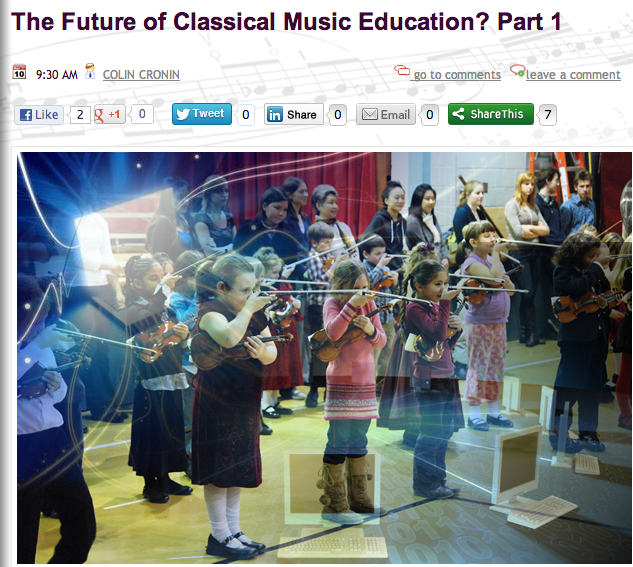
Here's a nice article on String Visions about the "Future of Classical Music Education" featuring ArtistWorks. This is part 1 of a series that Colin Cronin is writing about online music education and the role technology plays. Click on the image to read more!
Learning Online with Education Technology
Thu, 08/30/2012 - 4:59pm
In a book entitled "Mindset: The New Psychology of Success", author Carol S. Dweck points to motivation as an even greater indicator of success than previously thought. More often, she proposes, success in one's work comes as a byproduct of one's passion.
It's true, findings indicate that the most successful people are those who would be doing the exact same job even if they weren't successful at it. In education, this means that the most successful teachers are likely to be those who actually enjoy teaching and thus approach their jobs with passion.
Given this, the goal of any educational system should be to put passionate teachers in front of students. New developments in online learning and education technology make it possible for passionate teachers to reach far more students than they ever could in a physical classrooms. Sounds good, right?
- Follow Us:
-

-

-

-

